


UMMC experts confront postpartum mental health challenges
A high-profile Massachusetts case involving a mother who experienced severe mental illness after childbirth has renewed conversations about what happens when perinatal mental health, medicine and the legal system intersect.
At the University of Mississippi Medical Center, that conversation recently brought physicians, attorneys and a circuit court judge to the same table.

Dr. Tara Lewis, medical director of the OB-GYN Emergency Department and associate professor of emergency medicine; Dr. Theodora Browne, assistant professor of psychiatry and Dr. Kaitlyn Mize-Burnett, assistant professor of obstetrics and gynecology, came together to host a multidisciplinary discussion exploring the intersection of medicine, mental health and the law.
The event, titled “True Crime: Medical Case Files Brunch,” addressed what Lewis described as an emergency that physicians across the country need to become better equipped to recognize and manage.
“Because it is such a multidisciplinary and systemic issue, it was nice to get other people's perspectives,” said Lewis.
Lewis, Browne and Mize-Burnett said UMMC has cared for patients experiencing perinatal mental health conditions, including during the postpartum period, though not to the extent of the circumstances involved in the Lindsay Clancy case. Clancy was a mother of three young children, all under the age of six. Clancy is accused of strangling her children to death. Her defense team contends she suffered from undiagnosed postpartum psychosis at the time of the killings. The high-profile trial ended in a mistrial on September 4 after the jury couldn’t reach a verdict.
Each physician encounters mental illness through a different point in a patient's care, giving them distinct perspectives on recognizing symptoms and responding to patients' needs.

Browne’s interest in the condition began during residency, when she conducted research on postpartum psychosis. As the Clancy case continues to draw national attention, Browne said she wanted to take a deeper look at the issue and encourage conversations among the specialties involved in caring for these patients.
“Cases like this represent a profound tragedy that no one in health care wishes that they or their patients ever experience, but it underscores how important it is to critically examine our systems of care to best recognize those who may be at risk,” said Browne. “Given the high risk of the postpartum mental health space really needing a collaboration between the three specialties, we lunged at this opportunity to start this conversation.”
A 2021 report from the Mississippi State Department of Health cites data showing postpartum depression affected 13% of mothers in the United States. In Mississippi, 21% of mothers reported experiencing postpartum depression — nearly one in five new mothers.

“It is one of the only things I can say within that first year after having a baby actually increases your risk,” said Mize-Burnett. “You go from one in five to one in four within that first year after pregnancy. I also think the public and some physicians believe postpartum only lasts six weeks and it's done, but it's really the full perinatal period from conception to a year postpartum.”
Because of the hormonal shifts and other physical and emotional changes that can occur during pregnancy and after childbirth, all three physicians stressed the importance of helping residents, faculty and members of the community understand what they may be seeing, recognize warning signs and know when and where to seek help.
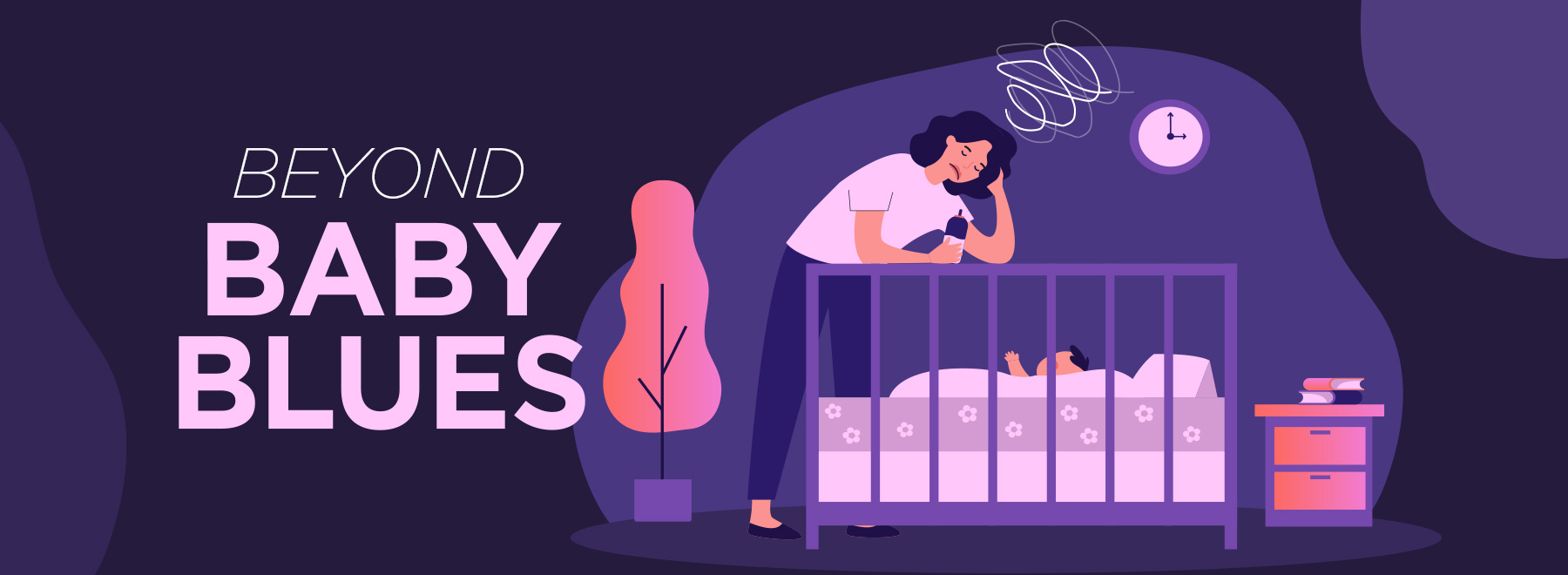
Recognizing those warning signs can sometimes be difficult, particularly when trying to distinguish postpartum depression from another common experience known as the “baby blues.”
Baby blues can include feelings of sadness or moodiness during the first few days after having a baby. Up to 4 in 5 people who give birth experience baby blues, which can affect new parents across families and communities.
Symptoms typically begin two to three days after birth and can last up to two weeks. They usually resolve on their own. When feelings of sadness persist beyond two weeks or begin interfering with a parent's ability to function or care for themselves or their baby, physicians become more concerned.
“We get worried as doctors, psychiatrists or providers in this space when people can't really take care of themselves,” said Browne. “They can't take care of their infant to the capabilities that they need to, and that can be due to depression, anxiety or other things.”
One of the most serious postpartum mental health conditions is postpartum psychosis. Symptoms can include delusions, hallucinations and paranoia, and the condition can place both the mother and infant at risk. Thoughts of suicide or harm may also occur. Life circumstances, stress and other strains can contribute to worsening symptoms.
"I think our most critical time period is going to be the month after delivery, which has been the window of onset historically defined by our Diagnostic and Statistical Manual of Mental Disorders, known as the DSM, which outlines the clinical criteria psychiatrists refer to for diagnostic purposes,” said Browne. “However, the reality is that the risk for postpartum mental illness to arise doesn't magically or suddenly disappear at four weeks postpartum."
For OB-GYNs, guidelines are available for screening patients for postpartum depression and other mental health conditions. Mize-Burnett said screening focuses heavily on the first weeks after birth, with patients screened again around four to six weeks postpartum. Additional screening may occur later, including around six months postpartum or during subsequent visits.
Mize-Burnett emphasized, however, that providers and families should understand that the postpartum period extends well beyond the traditional six-week postpartum visit.
People with a history of mental health conditions, including bipolar disorder, may be at higher risk for developing postpartum depression or psychosis. However, symptoms can look different from person to person.
Postpartum psychosis can occur in episodes, but treatment is available. Medications and other interventions can be effective when patients receive appropriate care.
For families who notice concerning changes in a loved one, Lewis, Mize-Burnett and Browne encourage them to advocate for that person and help connect them with appropriate care.
Families and clinicians also have access to resources outside of the hospital.
CHAMP for Moms, a UMMC extension program and perinatal mental health consultation service, provides free consultation and educational services for pediatric, perinatal and school-based clinicians across Mississippi. CHAMP is housed within UMMC's Department of Psychiatry and is operated in collaboration with the Mississippi Department of Mental Health. Call 601-984-2080 for more information.
The above article appears in CONSULT, UMMC’s monthly e-newsletter sharing news about cutting-edge clinical and health science education advances and innovative biomedical research at the Medical Center and giving you tips and suggestions on how you and the people you love can live a healthier life. Click here and enter your email address to receive CONSULT free of charge. You may cancel at any time.